Jovaxis
LiDAR reference
Submit a brief
🕐This content was recently imported and its data has not yet been reviewed. It will be verified soon — please excuse any inaccuracies.
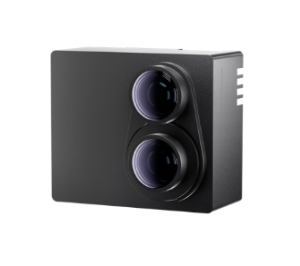
Hesai FTX 140 — photo 1
Hesai

FTX 140

Short-range solid-state LiDAR 140°, best balance between coverage and density for pedestrian and obstacle detection.

Indicative data to verify with manufacturers.

Technology
Solid-state
Wavelength
905 nm
Range
30 m @10% reflectivity
Horizontal FoV
140°
Vertical FoV
105°
Scan frequency
10 Hz
Vertical resolution
0.56°
Horizontal resolution
0.56°
IP rating
IP6K7 / IP6K9K
Temperature
-40 °C to +85 °C
Interfaces
Ethernet
ROS
Vendor SDK
Indicative price
1 300 €
Weight
Approx. 160 g (HFOV 140° version)
Points/second
492 000 pts/s (simple retour)

Relevant applications

Usage note

20m@10%, 140° horizontal. Standard version for mobile robotics and AMRs.

Partager

FAQ

What is the range of the Hesai FTX 140?

The stated range is 30 m @10% reflectivity. Actual range depends on target reflectivity and environmental conditions.

What is the field of view of the Hesai FTX 140?

Its stated field of view is 140° horizontal by 105° vertical.

Is the Hesai FTX 140 compatible with ROS?

Listed support: Vendor SDK. Check the driver version and ROS 2 compatibility before integration.

Similar products

Blickfeld Qb2
Blickfeld

Qb2

Range1-100 m (typ. 40-60 m) ▼
Channels—
FoV H90° ▼
FoV V50° ▼
Price2 750 € ▼
RoboSense E1
RoboSense

E1

Range30 m @10%
Channels144
FoV H120° ▼
FoV V90° ▼
Price1 100 € ▲
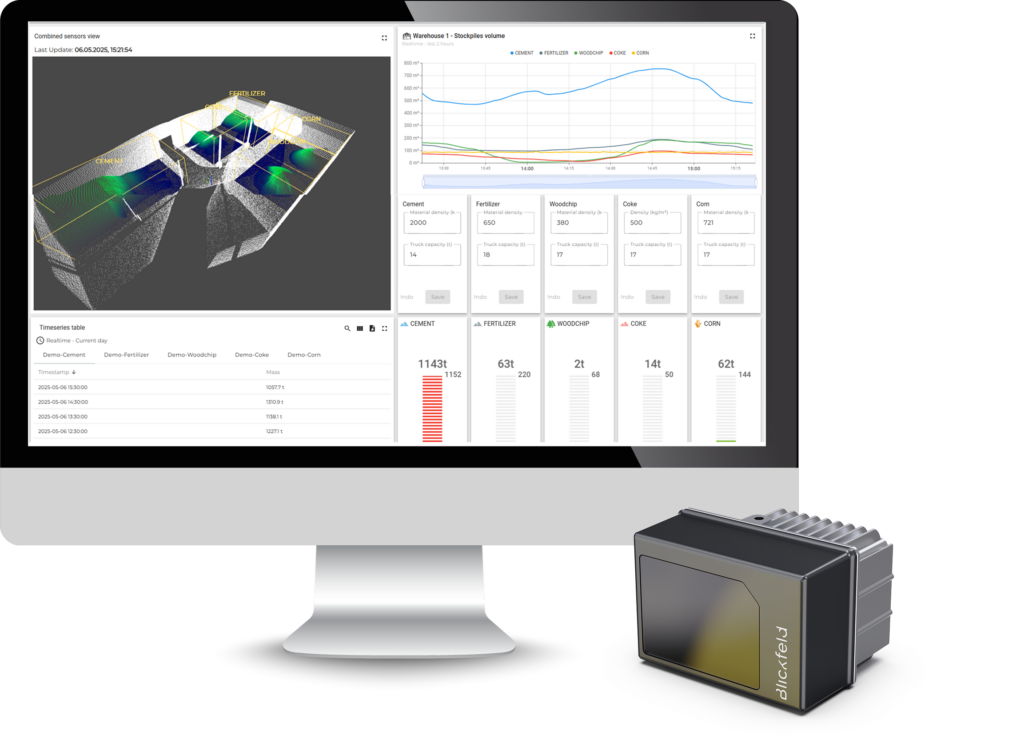
Blickfeld QbVolume
Blickfeld

QbVolume

Range1-100 m ▼
Channels—
FoV H90° ▼
FoV V50° ▼
Price3 300 € ▼
Blickfeld QbBasic
Blickfeld

QbBasic

Range1-100 m ▼
Channels—
FoV H90° ▼
FoV V50° ▼
Price2 200 € ▼

❓ Frequently asked questions

What is the field of view of the Hesai FTX 140?

A solid-state LiDAR usually covers a directional area rather than a full 360° panorama. Check the Hesai FTX 140 specifications for its horizontal and vertical angles to determine how many sensors are required.

Does the Hesai FTX 140 support ROS?

ROS compatibility depends on the drivers published by Hesai. Check which ROS or ROS 2 release is supported, the point cloud format and the host architecture before integration.

Which applications is the Hesai FTX 140 intended for?

The choice depends on the required range, field of view, resolution and operating environment. Compare these characteristics against your robotics, mapping, industrial or mobility project requirements.

What should be checked before integrating the Hesai FTX 140?

Check the available interfaces, power supply, dimensions, SDK, drivers and data formats. On-site validation is still recommended before any deployment.