Jovaxis
LiDAR reference
Submit a brief
🕐This content was recently imported and its data has not yet been reviewed. It will be verified soon — please excuse any inaccuracies.
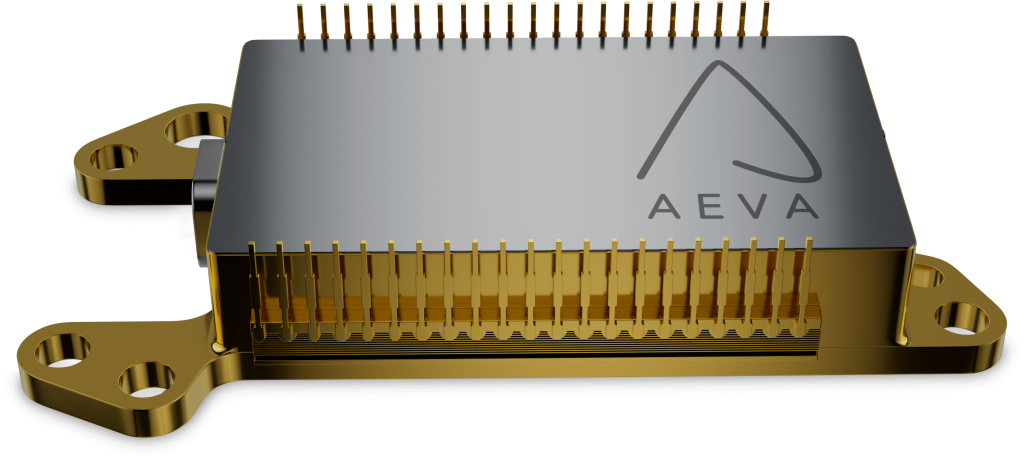
Aeva Atlas Ultra — photo 1
Aeva

Atlas Ultra

Ultra-long-range FMCW 4D LiDAR for SAE L3/L4 automotive programs.

Indicative data to verify with manufacturers.

Technology
FMCW
Wavelength
1,550 nm
Range
250 m at 10%; up to 500 m maximum (manufacturer announcement CES2025)
Horizontal FoV
120° (current product page; CES 2025 announcement: up to 150° configurable)
Vertical FoV
25°
Temperature
-40 °C to +85 °C
Interfaces
Ethernet
Indicative price
15 000 €
Points/second
Not published (FMCW)

Relevant applications

Usage note

Slimmest long-range LiDAR. Available H1 2026. CoreVision + X1 SoC.

Partager

FAQ

What is the range of the Aeva Atlas Ultra?

The stated range is 250 m at 10%; up to 500 m maximum (manufacturer announcement CES2025). Actual range depends on target reflectivity and environmental conditions.

What is the field of view of the Aeva Atlas Ultra?

Its stated field of view is 120° (current product page; CES 2025 announcement: up to 150° configurable) horizontal by 25° vertical.

Is the Aeva Atlas Ultra compatible with ROS?

Listed support: —. Check the driver version and ROS 2 compatibility before integration.

Similar products

Aeva Omni
Aeva

Omni

Range80 m maximum; reference reflectivity not published ▼
Channels—
FoV H360° ▲
FoV V90° ▲
Price10 000 € ▲
Aeva Atlas
Aeva

Atlas

RangeUp to 250 m on 10% target
Channels—
FoV H120°
FoV V30° ▲
Price12 000 € ▲
Voyant Photonics

Carbon 30 128-line

Range150 m maximum stated; reflectivity not specified ▼
Channels128 lines (variant resolution, number of physical channels not confirmed)
FoV H120°
FoV V30° ▲
Price—
Voyant Photonics

Carbon 60 128-line

Range75 m maximum announced; reflectivity not specified ▼
Channels128 lines (variant resolution, number of physical channels not confirmed)
FoV H90° ▼
FoV V60° ▲
Price—

❓ Frequently asked questions

What is the difference between the Aeva Atlas Ultra and a time-of-flight LiDAR?

The Aeva Atlas Ultra uses FMCW, which analyses the frequency variation of a continuous laser signal. It can measure distance and radial velocity at the same time, unlike a conventional time-of-flight LiDAR that derives distance from an impulse's round-trip time.

Does the Aeva Atlas Ultra measure object speed directly?

An FMCW sensor can exploit the Doppler effect to provide radial velocity in addition to distance. The outputs actually available depend on the software and configuration offered by the manufacturer.

Which applications is the Aeva Atlas Ultra intended for?

The choice depends on the required range, field of view, resolution and operating environment. Compare these characteristics against your robotics, mapping, industrial or mobility project requirements.

What should be checked before integrating the Aeva Atlas Ultra?

Check the available interfaces, power supply, dimensions, SDK, drivers and data formats. On-site validation is still recommended before any deployment.